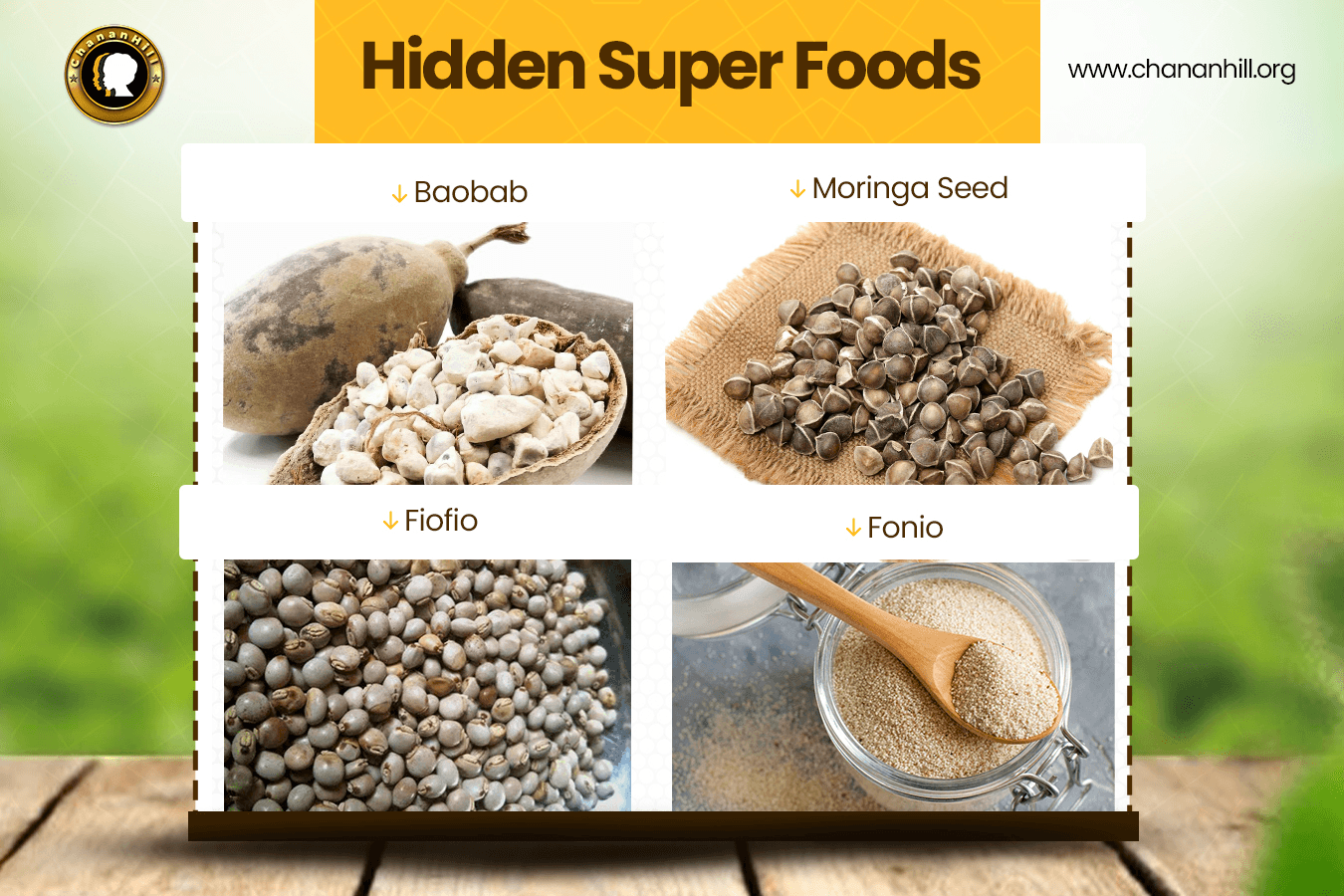
As cities expand and global food markets grow, Africa’s traditional superfoods are slowly fading from our plates. Packaged cereals, imported snacks, and fast foods have become the norm, while crops like moringa, baobab, fonio, and tiger nuts are treated as relics of the past.
Yet, these indigenous foods are anything but outdated. They are nutritional treasures, naturally adapted to African environments, and deeply tied to cultural identity. Research has repeatedly shown how these foods can fight malnutrition, support climate resilience, and even fuel economic development.
- Moringa Oleifera: The Miracle Tree
Moringa, sometimes called the “miracle tree,” grows widely across Africa and Asia. For centuries, it has been used to treat wounds, inflammation, and nutritional deficiencies.
- Nutritional profile: Rich in vitamins A, C, and K; iron; calcium; plant protein; and antioxidants (EatingWell, 2019).
- Health benefits (2018–2025 research):
- May help regulate blood sugar and cholesterol levels.
- Strengthens immunity through antioxidants.
- Contains compounds like niaziminin A, which new molecular docking studies (2025) suggest may play a role in cancer prevention (Arxiv, 2025).
- Supports gut health when consumed in moderate amounts.
How to use it: Moringa leaves can be boiled for tea, dried into powders for smoothies or porridge, or sprinkled into soups and sauces, a low-cost way to boost daily nutrition.
- Baobab (Adansonia digitata): The Tree of Life
The baobab is one of Africa’s most iconic trees, often seen as a cultural symbol as well as a food source. Its fruit pulp, seeds, and leaves are used in food and traditional medicine.
- Nutritional value:
- Up to seven to ten times more vitamin C than oranges.
- Rich in calcium, potassium, and dietary fibre.
- Contains polyphenols with strong antioxidant activity (MDPI, 2022).
- Health benefits:
- Boosts immune function.
- Improves gut health by acting as a prebiotic.
- Reduces oxidative stress, lowering risks of chronic disease (Health.com, 2024).
- Cultural and economic role: Baobab is now used in health foods and cosmetics worldwide, creating opportunities for African farmers (MDPI, 2022).
How to use it: Baobab fruit powder can be mixed into smoothies, porridges, energy bars, or simply blended into cold drinks for a refreshing vitamin C boost.
- Fonio: The Ancient Grain with Modern Promise
Fonio is one of the oldest African cereals, cultivated for over 5,000 years in West Africa. Despite its history, it was long dismissed as a “poor man’s crop.” Today, however, fonio is being rediscovered as a supergrain.
- Nutritional profile:
- Gluten-free and rich in amino acids.
- Contains iron, zinc, magnesium, fibre, and B vitamins (Healthline, 2025).
- It has a low glycemic index, making it diabetes friendly.
- Environmental value: Fonio thrives in dry, sandy soil with little water, making it an ideal climate-resilient crop (EatingWell, 2023).
- Health benefits (2018–2025): Supports digestion, provides slow-release energy, and helps reduce micronutrient deficiencies.
How to use it: Fonio can replace rice or couscous, be ground into flour for gluten-free baking, or be brewed into traditional drinks and porridges.
- Tiger Nuts: The Underground Walnut
Tiger nuts, also known as “earth almonds” or “Aya,” are small tubers consumed across Africa for centuries. Though often overlooked, they pack a serious nutritional punch.
- Nutritional profile (Cleveland Clinic, 2025; Healthline, 2025):
- High in fibre (great for digestion).
- Contain vitamin E, vitamin C, potassium, and magnesium.
- Provide heart-healthy fats like olive oil.
- Rich in resistant starch, which improves gut health.
- Health benefits (2018–2025):
- Aid in blood sugar control (NDTV, 2025).
- Support cardiovascular health.
- Provide natural energy and help fight fatigue.
- Show antibacterial properties in preliminary studies.
How to use it: Tiger nuts can be eaten raw, roasted, or boiled. They can also be processed into tiger nut milk (a dairy alternative), ground into flour, or mixed into cereals, salads, and desserts.
- Why Reviving Indigenous Superfoods Matters
Between 2018 and 2025, global research and African case studies have emphasized that reviving native foods is not just about eating healthy; it’s about reshaping food systems.
- For health: These foods fight malnutrition, micronutrient deficiencies, and lifestyle diseases like diabetes and hypertension.
- For the environment: Being climate-adapted, they require fewer chemicals and water than imported crops.
- For the economy: Demand for organic, plant-based, and superfood products is increasing globally. This opens new markets for African farmers and food entrepreneurs.
- For culture: Food is heritage. Promoting moringa, baobab, fonio, and tiger nuts helps protect African identity in a globalised food culture.
Final Thoughts
Africa’s “forgotten foods” are not simply old traditions; they are modern solutions. Moringa strengthens immunity, baobab nourishes the gut, fonio fuels with sustainable energy, and tiger nuts protect the heart.
As the world grapples with rising food insecurity, climate change, and health challenges, the revival of these hidden superfoods is not just a choice; it’s a necessity.
So, next time you prepare a meal, ask yourself: Am I eating to survive, or am I eating to thrive? Choosing indigenous superfoods may just be the step toward a healthier body, a resilient planet, and stronger African food systems.
References (2018–2025)
- EatingWell (2019). The Benefits and Risks of Moringa.
- Arxiv (2025). Molecular Docking Studies on Moringa Compounds and BCL-2 Inhibition.
- MDPI (2022). Nutritional and Antioxidant Properties of Baobab Fruit from Angola.
- Health.com (2024). Baobab Fruit Health Benefits.
- Healthline (2025). Fonio: Nutrition, Benefits, and Recipes.
- EatingWell (2023). Whole Grain Cooking Guide.
- Cleveland Clinic (2025). Tiger Nuts: Nutritional Profile and Health Benefits.
- Healthline (2025). Tiger Nuts: Benefits and Risks.
- NDTV Health (2025). Tiger Nuts: Benefits for Digestion and Diabetes Control.