
Nigeria faces significant challenges in cooking fuel access, with millions of households relying on traditional biomass and open-fire cooking methods. The World Health Organization states that 95,300 Nigerian women die annually from use of firewood. If a woman cooks breakfast, lunch and dinner, it is equivalent to smoking between three and 20 packets of cigarettes “Nigeria Deforestation Rates & Statistics | GFW” as reported in TIME magazine in 2016. This dependence contributes to deforestation and environmental degradation, indoor air pollution and associated health risks, time burden on women and girls for fuel collection and limited economic opportunities for marginalized communities, particularly PWDs. Also, traditional cooking fuel systems provide limited economic opportunities for marginalized groups, particularly PWDs and women in rural communities.
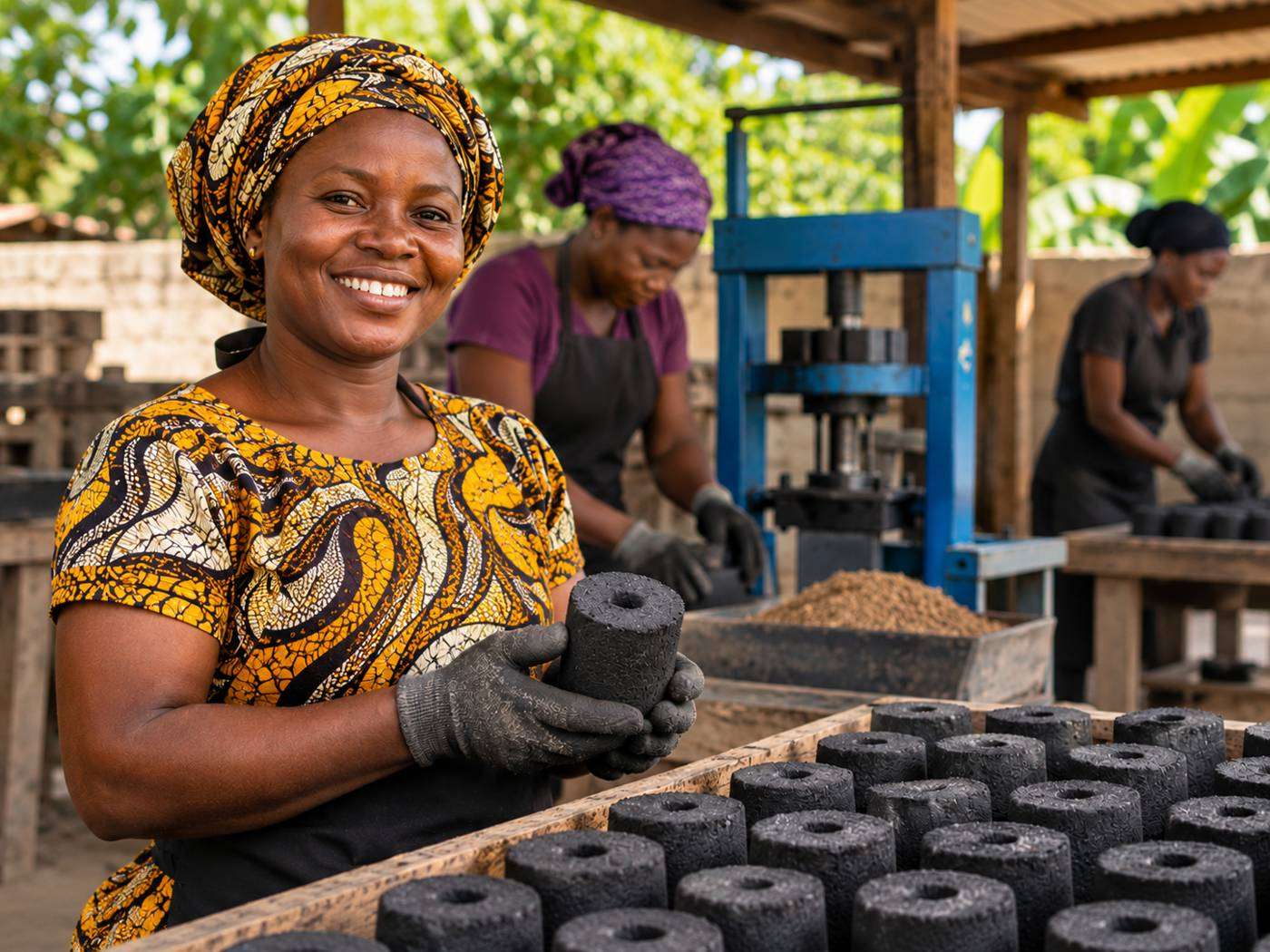
ChananHill’s innovative approach was to address cooking fuel challenges while creating economic opportunities especially for persons with disabilities (PWDs), particularly women, through briquette production and marketing enterprises by establishing and scaling PWD-led enterprises focused on briquette production and marketing as an alternative to open firewood fuel, promoting safe, efficient, and environmentally sustainable cooking practices.
Our partnership with Women Disability Support Foundation (WDSF), a women-led organization providing grassroots connections and credibility, Rensy Foundation, Social entrepreneur managing community-based production assets and XGL Fabricators the commercial partner providing machine fabrication, training, and vendor financing birthed 7 briquette production centers established in Northeast Nigeria, 50 micro-entrepreneurs trained and operational (3 PWD-operated facilities), 30 women sales agents engaged in last-mile distribution, 55 metric tons of briquettes sold over 18 months, N3.3 million in total sales value generated and 1,000 households per entrepreneur reached monthly (ongoing growth).
The model’s strength lies in its inclusive design, proven financial viability, and comprehensive approach to market development. It creates sustainable economic opportunities while delivering critical environmental and health benefits to communities. This presents a compelling case for scaling an evidence-based intervention that delivers measurable social, economic, and environmental returns. With appropriate investment in partnership development, technology access, and market expansion, this initiative can significantly contribute to achieving multiple Sustainable Development Goals while creating sustainable livelihoods for marginalized communities. The time is right to build on proven success and scale this innovative model across Nigeria and beyond, creating lasting impact for both entrepreneurs and the communities they serve.