
Women play a central role in agricultural value chains, accounting for approximately 40% of the global agricultural workforce and 50% of the agrifood systems workforce in Sub-Saharan Africa (FAO, 2023; FAO et al., 2025). They are actively involved as entrepreneurs, livestock owners, and smallholder farmers. However, persistent inequalities in access to productive resources, financing, land, and market opportunities continue to constrain their economic potential and advancement (FAO, 2023). These challenges are particularly pronounced among women recovering from conflict, who often face additional barriers to rebuilding their livelihoods, restoring productive assets, and achieving economic independence. Supporting these women to regain access to productive resources is therefore essential to strengthening household and community resilience.
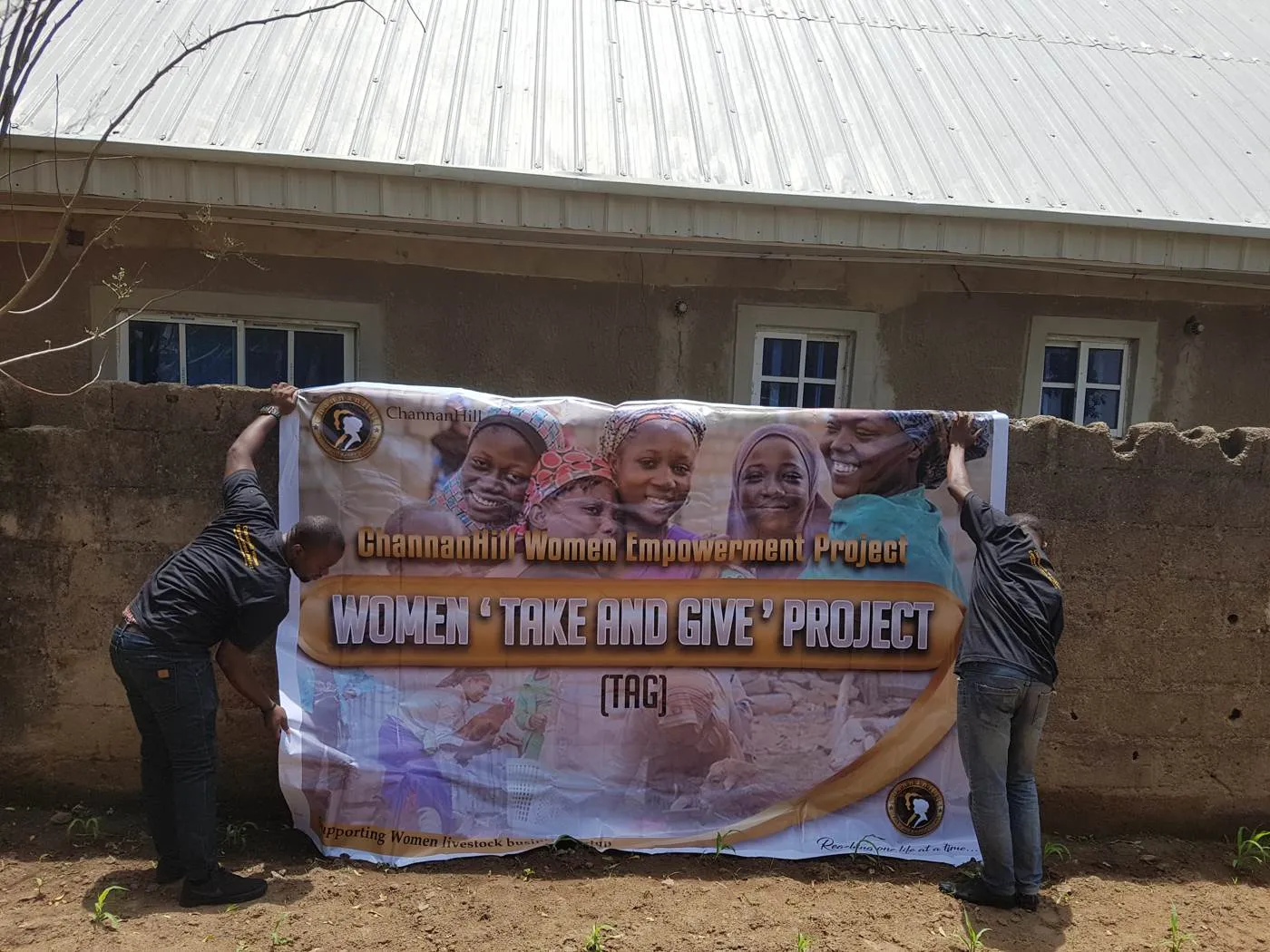
At ChananHill, we address these challenges through our Take and Give (TAG) model, a community-based social innovation approach designed to restore livelihoods, strengthen resilience, and promote collective economic empowerment among vulnerable women.
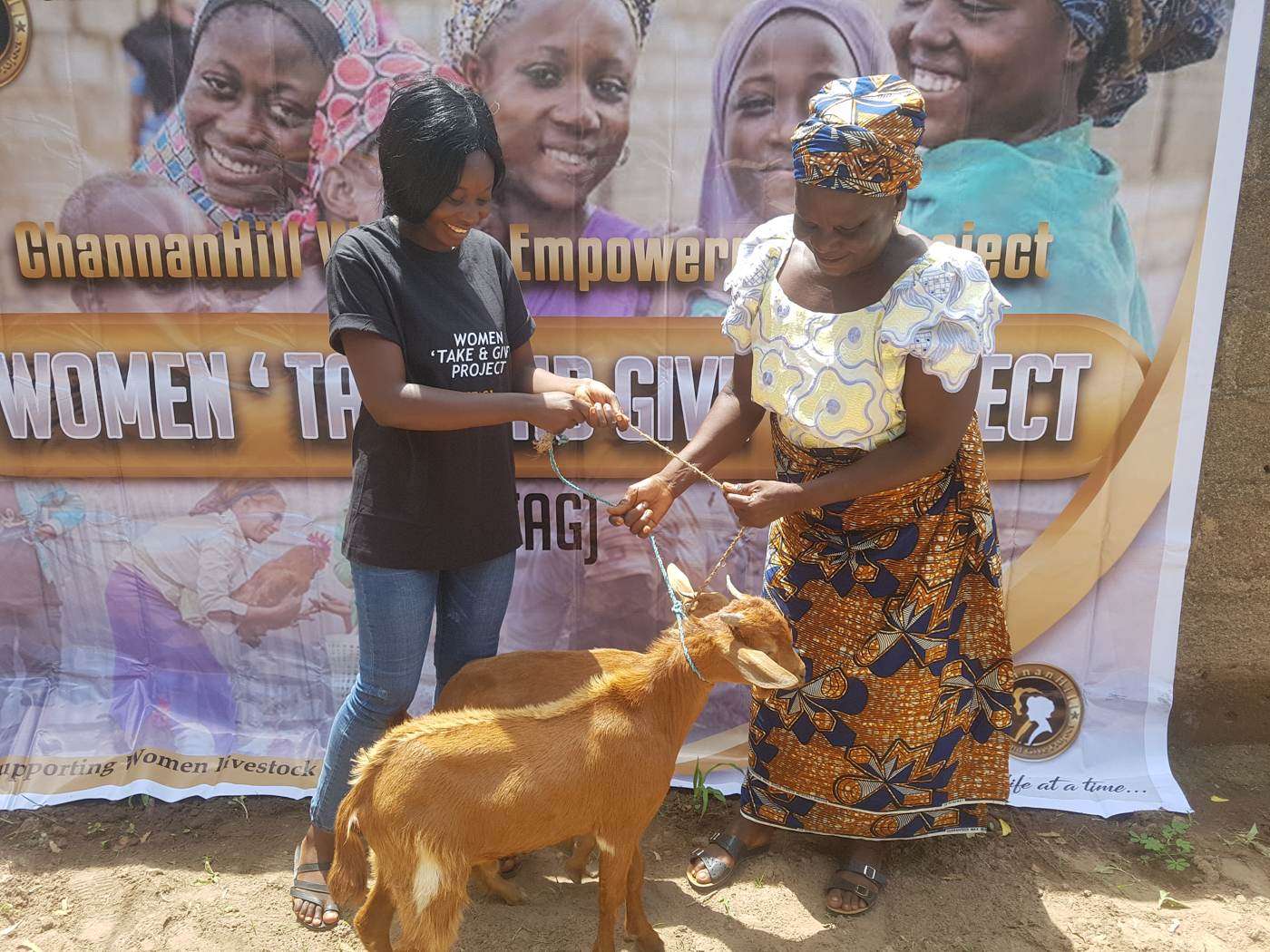
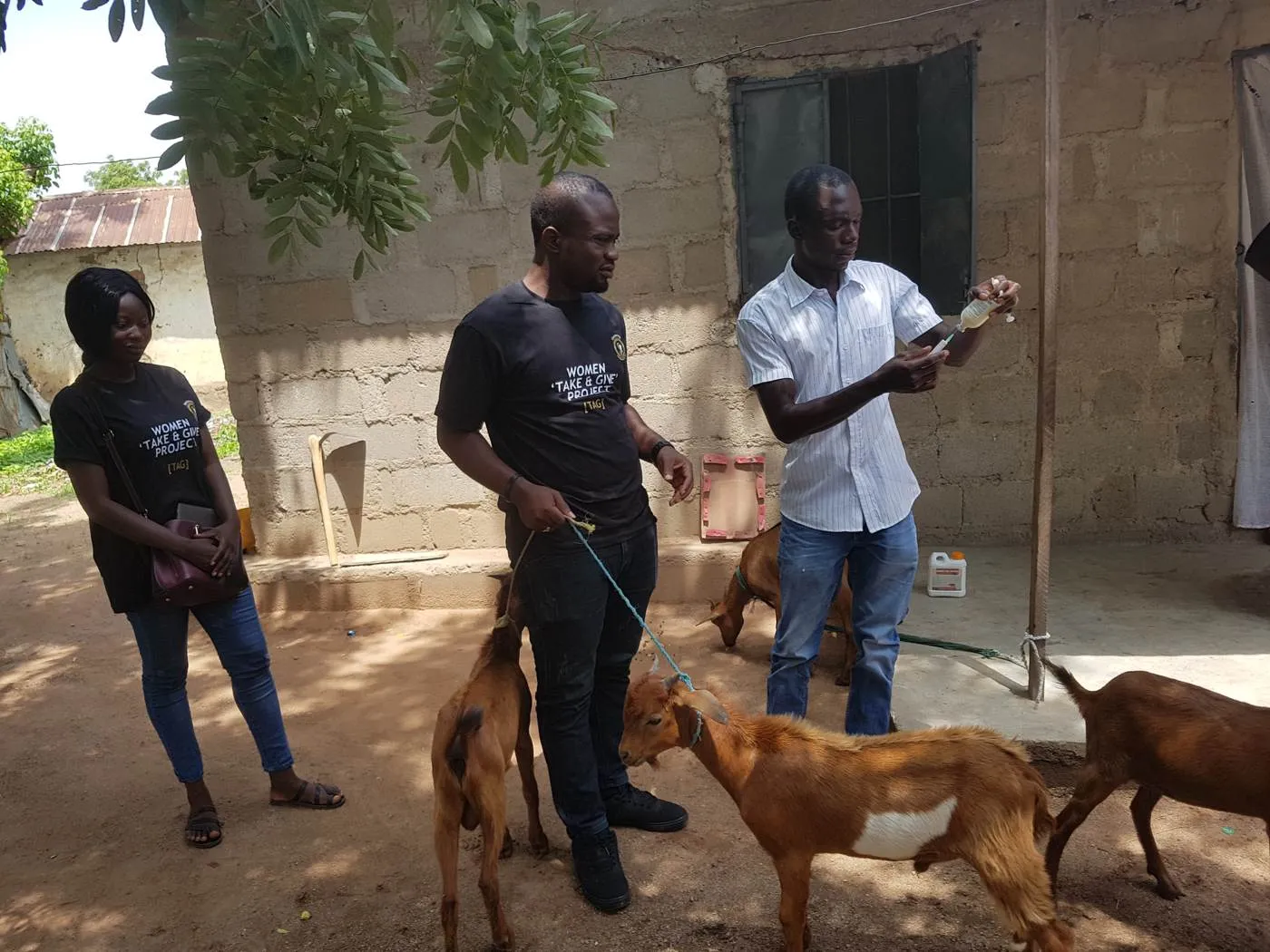
The project identifies vulnerable communities and prioritises women farmers, particularly widows and internally displaced women, who often face heightened economic and social vulnerabilities. Selected beneficiaries receive small ruminants (one male and one female goat), alongside essential support such as medication, vaccines, and feed to help establish sustainable livestock-based livelihoods.
The model is built around a simple but powerful principle. pay it forward. When the goats reproduce, the beneficiary identifies another vulnerable woman in her community who is interested in participating in the initiative and transfers one offspring to her, while retaining the remaining offspring. This cycle continues, enabling more women to access productive assets and build sustainable sources of income.
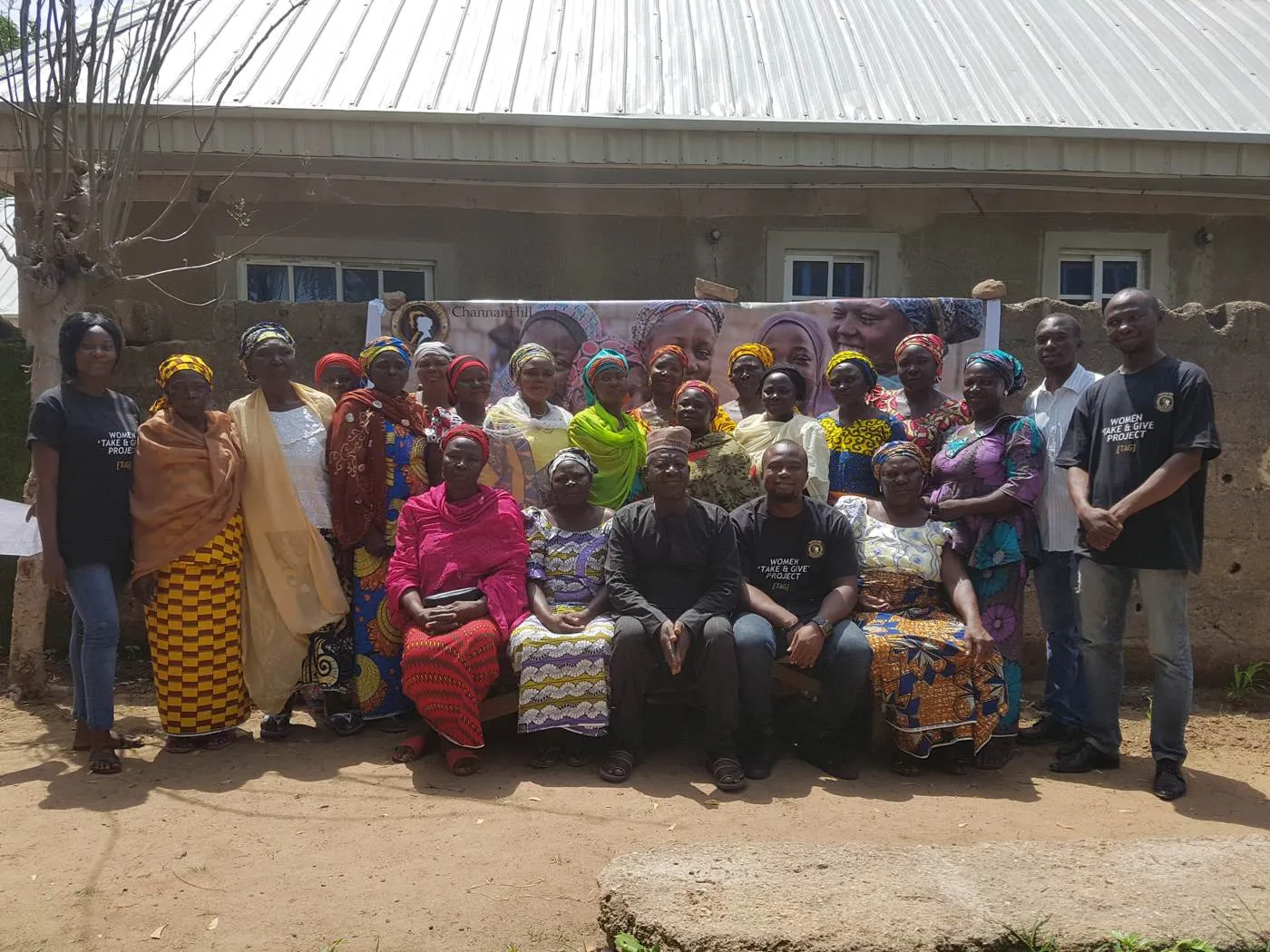
Beyond improving individual livelihoods, TAG fosters solidarity, collective action, and stronger community networks, creating a multiplier effect that extends the project’s impact beyond its direct beneficiaries.
To date, we have reached over 5,000 women, growing from 30 direct beneficiaries at the project’s inception in 2019.